Australia's highest decoration for heroism away from the battlefield, and the five Royal Australian Navy men who earned it.
The exhibition
On 27 November 2015, in a televised event in front of two hundred invited guests, the Victorian Maritime Centre unveiled the George Cross exhibition.
Among the honoured guests was Keith Payne VC. Keith Payne (born 30 August 1933) is a retired Australian soldier and a recipient of the Victoria Cross (VC), the highest decoration for gallantry "in the presence of the enemy" awarded to members of the British and Commonwealth armed forces. Payne's VC was awarded for his actions during the Vietnam War.
The George Cross
The George Cross stands as Australia's highest decoration for acts of the greatest heroism performed away from the battlefield. While the Victoria Cross honours valour in the face of the enemy, the George Cross recognises ultimate courage in circumstances of extreme, non-combative peril.
Among its distinguished recipients are five men of the Royal Australian Navy (RAN) whose extraordinary bravery defined the very essence of the medal.
The five recipients
Four of these men served during World War II within the Royal Australian Naval Volunteer Reserve (RANVR). Tasked with the terrifying job of rendering enemy mines safe, they faced "cold courage" situations where a single misstep meant instant death. The fifth earned his medal in one of Australia's greatest peacetime maritime disasters. Each has a framed display in the exhibition, shown below.
Why they were rewarded
These men were rewarded because they chose to run toward danger rather than away from it. Whether sweating over a live ticking fuse or maintaining calm in a drowning vessel, their actions reflected a profound level of self-sacrifice and an unwavering devotion to saving the lives of others.
The exhibition
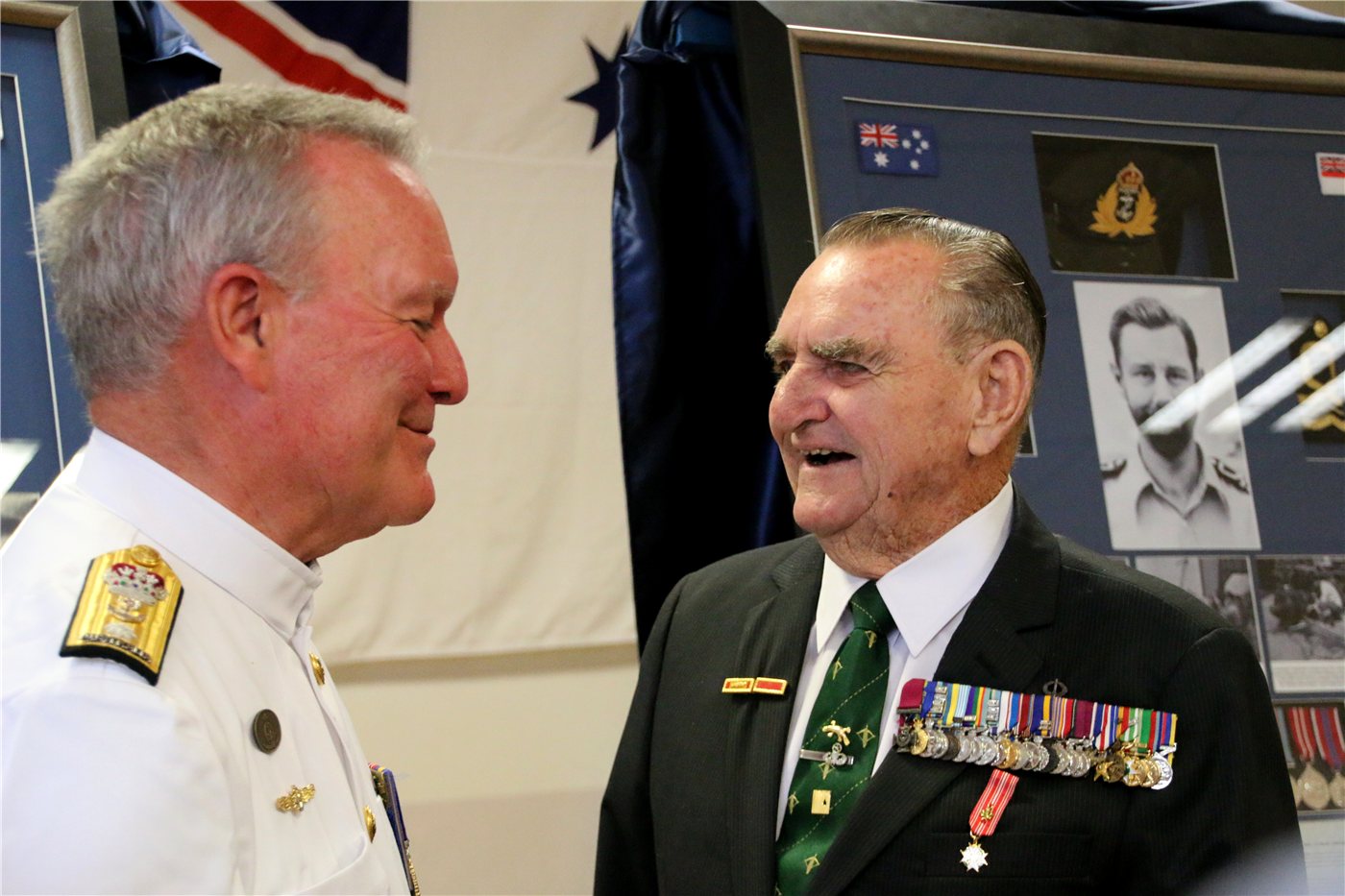
At the unveiling
Among the honoured guests at the unveiling on 27 November 2015 was Keith Payne VC.
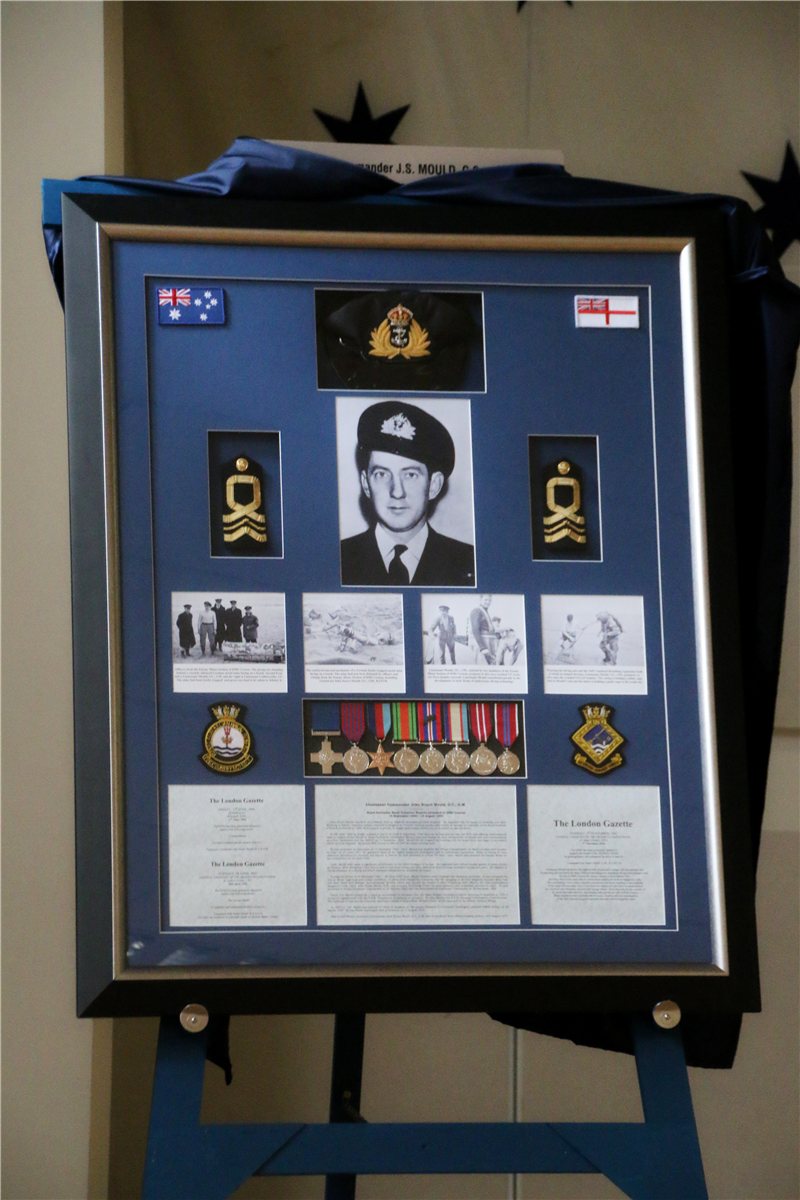
Lieutenant Commander John Stuart Mould, GC, GM
Awarded the George Cross in 1942 for his exceptional gallantry in defusing highly sensitive German magnetic and acoustic mines under harrowing conditions.
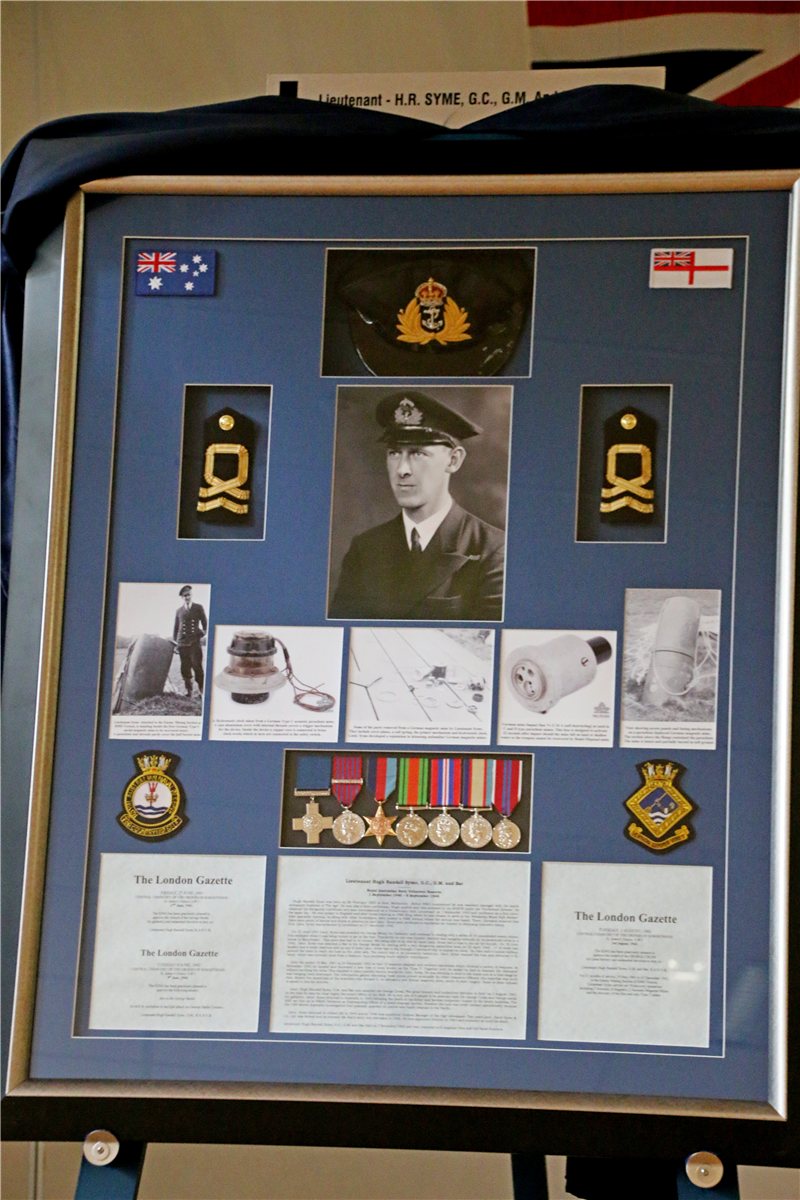
Lieutenant Hugh Randall Syme, GC, GM and Bar
Renowned for his incredible stamina and bravery, Syme defused numerous unexploded bombs and mines across the United Kingdom during the Blitz, surviving some of the most dangerous assignments of the war.
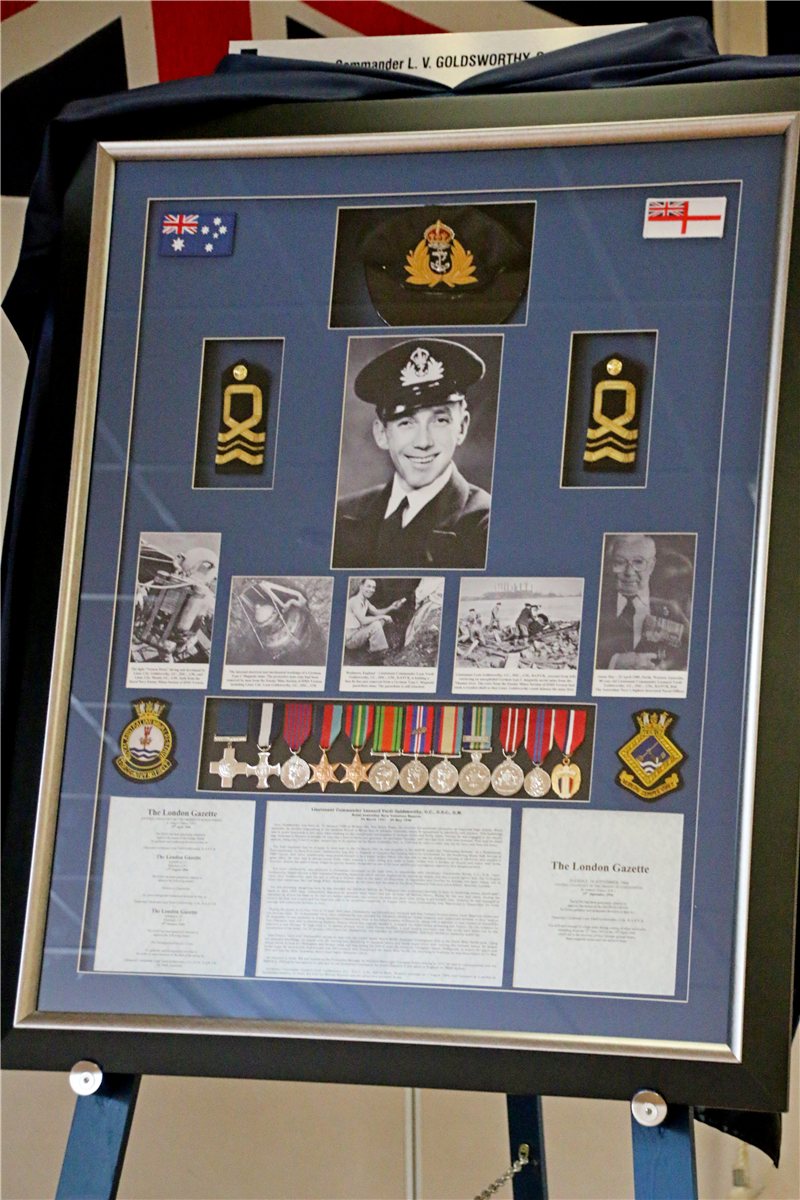
Lieutenant Commander Leon Verdi Goldsworthy, GC, DSC, GM
Celebrated for his meticulous and calm bravery while defusing underwater mines, often working in complete darkness and under the constant threat of detonation.
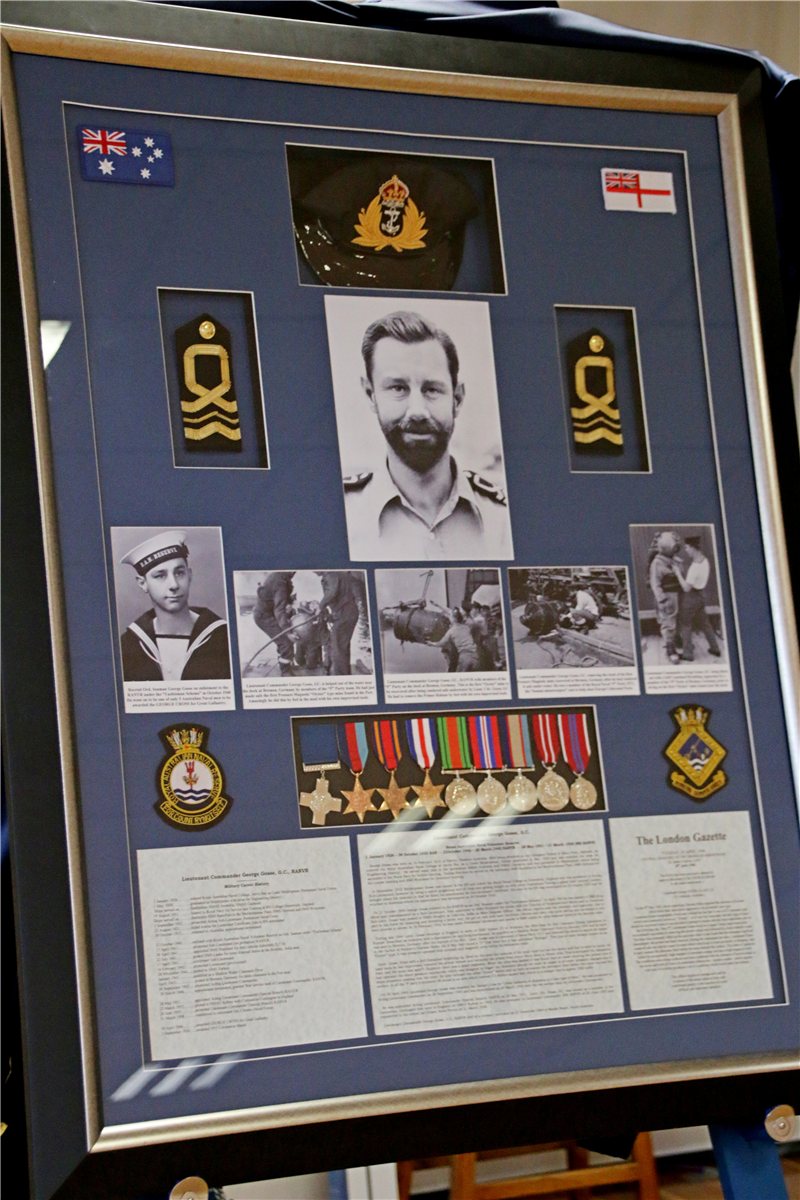
Lieutenant Commander George Gosse, GC
Earned his medal after the war in Europe had ended. In 1945 he dived into the murky waters of Bremen Harbour to successfully defuse a newly designed, highly volatile German mine that threatened Allied shipping.
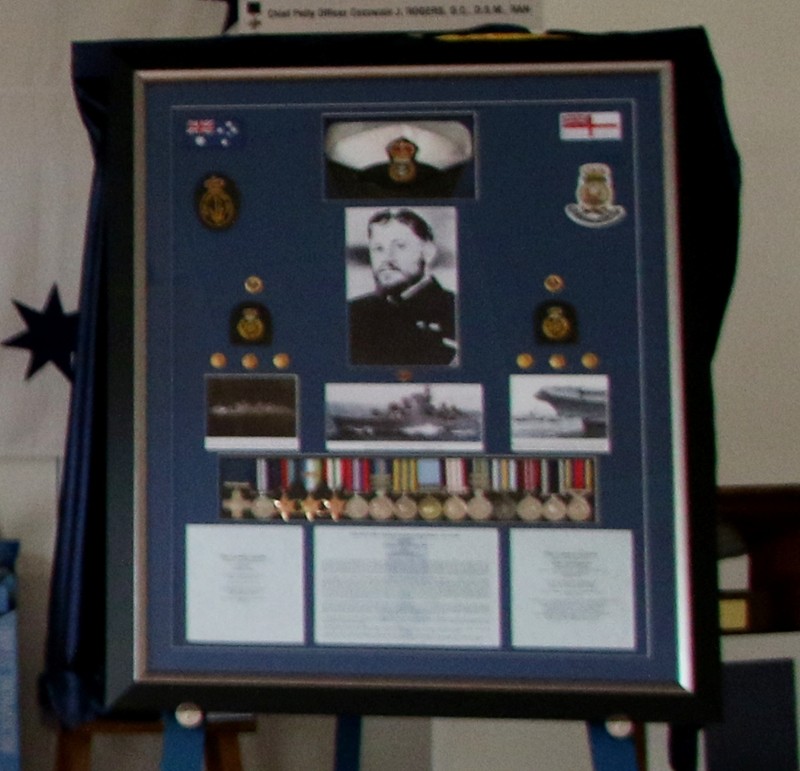
Chief Petty Officer Coxswain Jonathan "Buck" Rogers, GC, DSM
His award was earned not in mine disposal, but on 10 February 1964, when the destroyer HMAS Voyager collided with the aircraft carrier HMAS Melbourne and sank rapidly.
Trapped in a sinking, darkened compartment with scores of other men, he took immediate control. Realising he was too large to fit through the small escape hatch himself, he spent his final moments organising the escape of younger sailors. He was last heard leading those trapped inside in a prayer as the compartment submerged.