Royal Australian Navy
Scale models, dioramas and memorabilia from Australia's naval heritage.
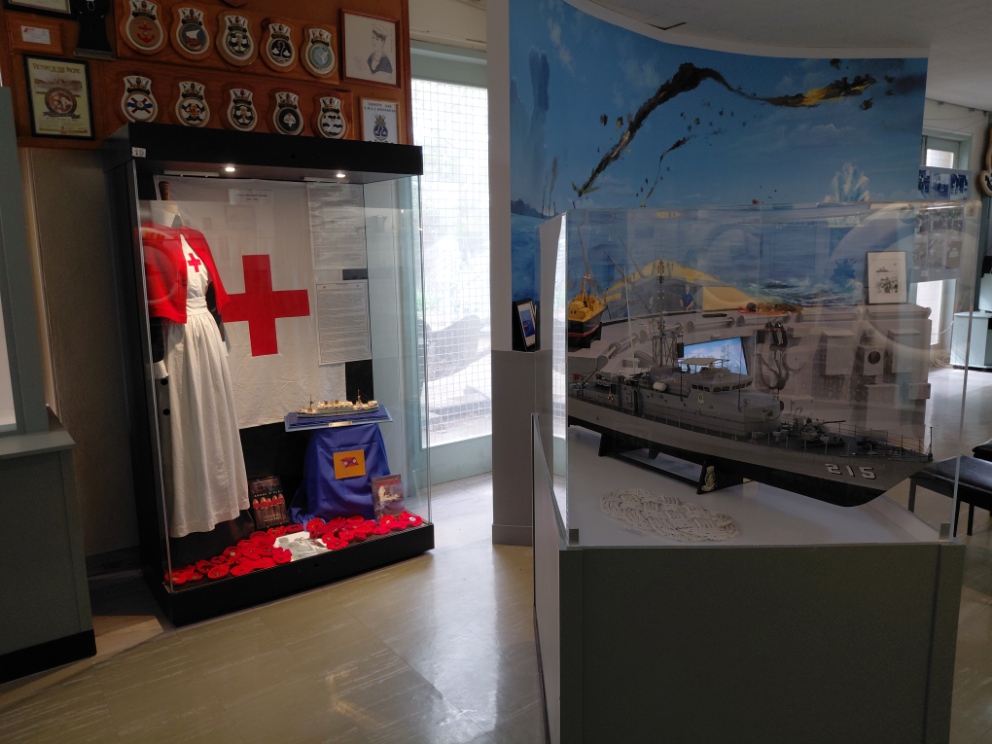
The Victorian Maritime Centre delivers a captivating exploration of Australia's naval heritage. Managed by the volunteer-led Western Port Oberon Association, the museum serves as a repository for artefacts, scale models and historical memorabilia that chronicle the legacy of both the pre-Federation Victorian Navy and the Royal Australian Navy (RAN).
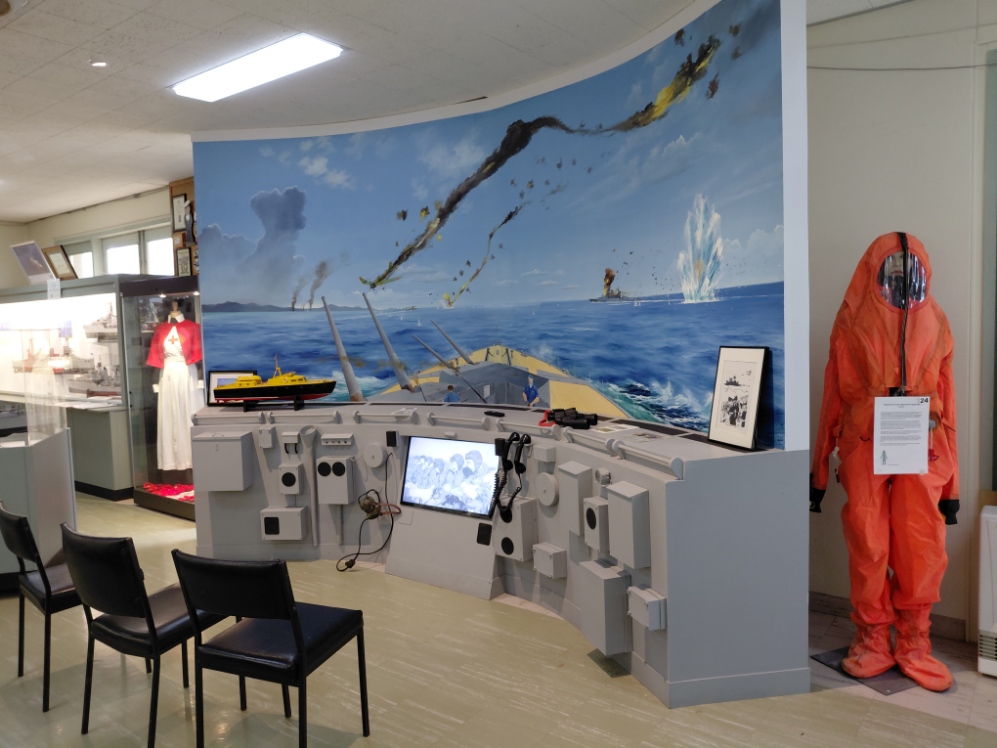
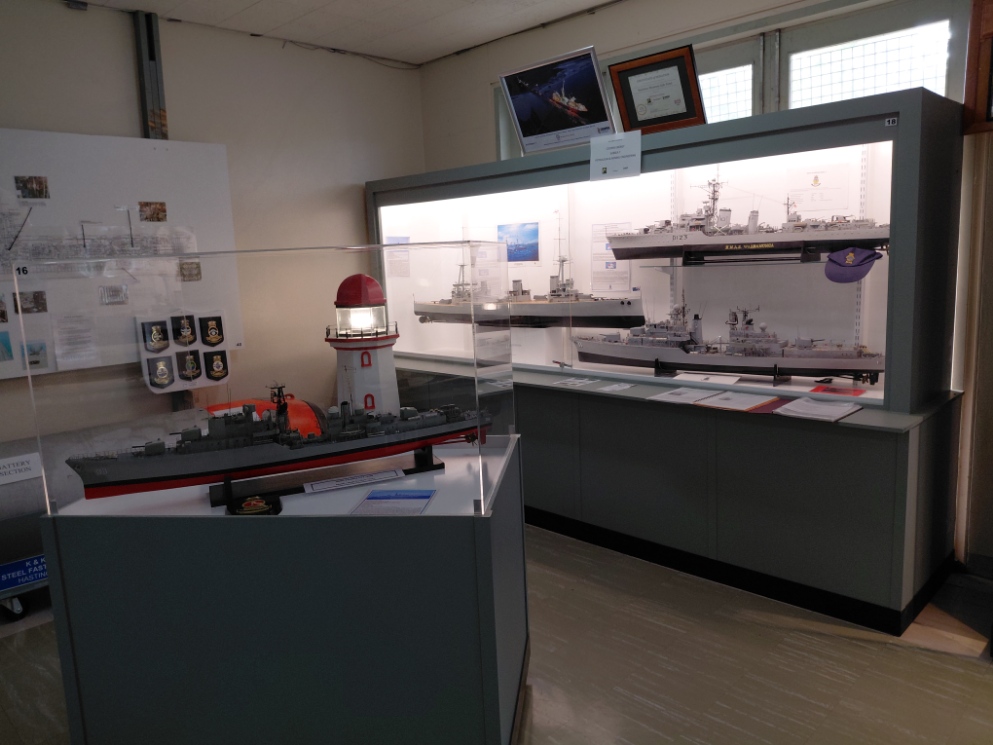
The exhibition hall features meticulously crafted, working scale models of Australian warships, historical photographs, and unique naval memorabilia.
A number of the beautiful models are radio controlled. The centre has a demountable pool, which it sets up at special outdoor events, with members sailing the models. This display is always a great hit with young and old.
Detailed dioramas recreate pivotal moments in RAN history, such as the Australian submarine AE2 breaching the Dardanelles during the Gallipoli campaign of World War I, and the flagship HMAS Australia navigating the heavy conflicts of Leyte Gulf during World War II.
In the museum
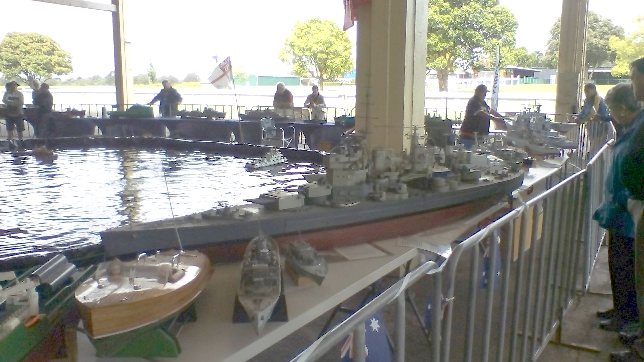
Radio-controlled models
The demountable pool is set up at special outdoor events, with members sailing the models.
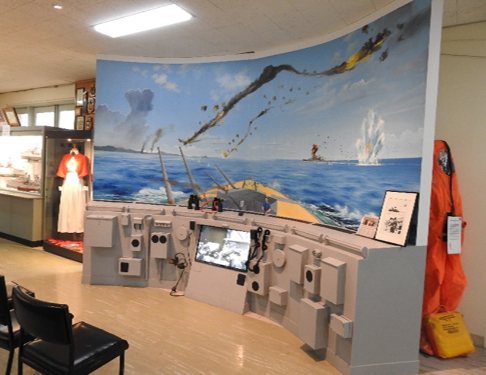
HMAS Australia at Leyte Gulf
The flagship HMAS Australia navigating the heavy conflicts of Leyte Gulf during World War II.
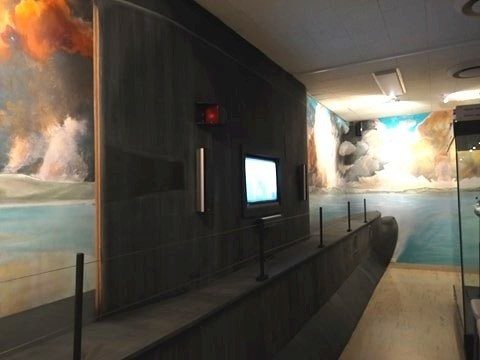
AE2 at the Dardanelles
The Australian submarine AE2 breaching the Dardanelles during the Gallipoli campaign of World War I.
A short history of the Royal Australian Navy
The RAN holds a distinguished history deeply intertwined with Australia's path to modern nationhood. Spanning from colonial maritime forces to a sophisticated, technologically advanced 21st-century fleet, the RAN has consistently served to protect Australia's economic lifelines and regional security.
Formation and early years (1901 to 1913)
Before federation, the Australian colonies maintained a fragmented network of individual naval forces designed primarily for local coastal defence. Following the unification of the states, these colonial assets were integrated on 1 March 1901 to establish the Commonwealth Naval Forces. Driven by the persistent advocacy of Captain William Rooke Creswell, the young nation moved away from paying defensive subsidies to the British Royal Navy toward operating its own independent fleet.
On 10 July 1911, King George V formally granted the prefix "Royal", officially creating the Royal Australian Navy. A defining moment of national sovereignty occurred on 4 October 1913, when the newly acquired foundation fleet, consisting of the flagship battlecruiser HMAS Australia, light cruisers and destroyers, steamed through Sydney Heads for the first time.
The World Wars
The onset of the First World War in 1914 quickly tested the raw capability of the infant navy. The RAN secured a historic victory on 9 November 1914 when the light cruiser HMAS Sydney destroyed the notorious German raider SMS Emden at the Battle of Cocos. RAN ships and submarines also participated significantly in the Dardanelles campaign and global anti-submarine patrols.
During the Second World War, the RAN underwent a massive expansion to combat Axis powers across multiple hemispheres. Operating extensively in the Mediterranean, Indian and Pacific Oceans, Australian sailors faced heavy actions. The RAN suffered heartbreaking losses, including the sinking of HMAS Sydney (II) and HMAS Perth (I), yet proved instrumental in halting enemy advances through pivotal campaigns such as the Battle of the Coral Sea and the liberation of the Philippines.
The Cold War and modern conflicts
In the post-war era, the RAN adapted to a changing geopolitical climate, developing robust anti-submarine and naval aviation capabilities. The navy supported United Nations and Commonwealth operations during the Korean War, the Malayan Emergency and the Vietnam War.
As the strategic focus shifted toward regional security and border protection, the RAN transitioned to a highly specialised force. It served with distinction during the Gulf War and maintained a constant, stabilising presence in Middle Eastern maritime security operations. RAN vessels also became critical tools for regional peacekeeping, playing leading enforcement roles in East Timor and the Solomon Islands, alongside regular humanitarian aid and disaster relief missions across the Indo-Pacific.
The present era
Today, the Royal Australian Navy enters its most consequential modern decade. Moving beyond traditional platforms, the modern RAN operates sophisticated Hobart-class guided-missile destroyers, Anzac-class frigates and Canberra-class amphibious assault ships. Under major strategic modernisations like the AUKUS agreement, the RAN is charting a course to field conventionally armed, nuclear-powered submarines. As an island nation dependent on open sea lanes, the RAN continues to evolve, standing ready to project sovereign power and safeguard regional stability.